
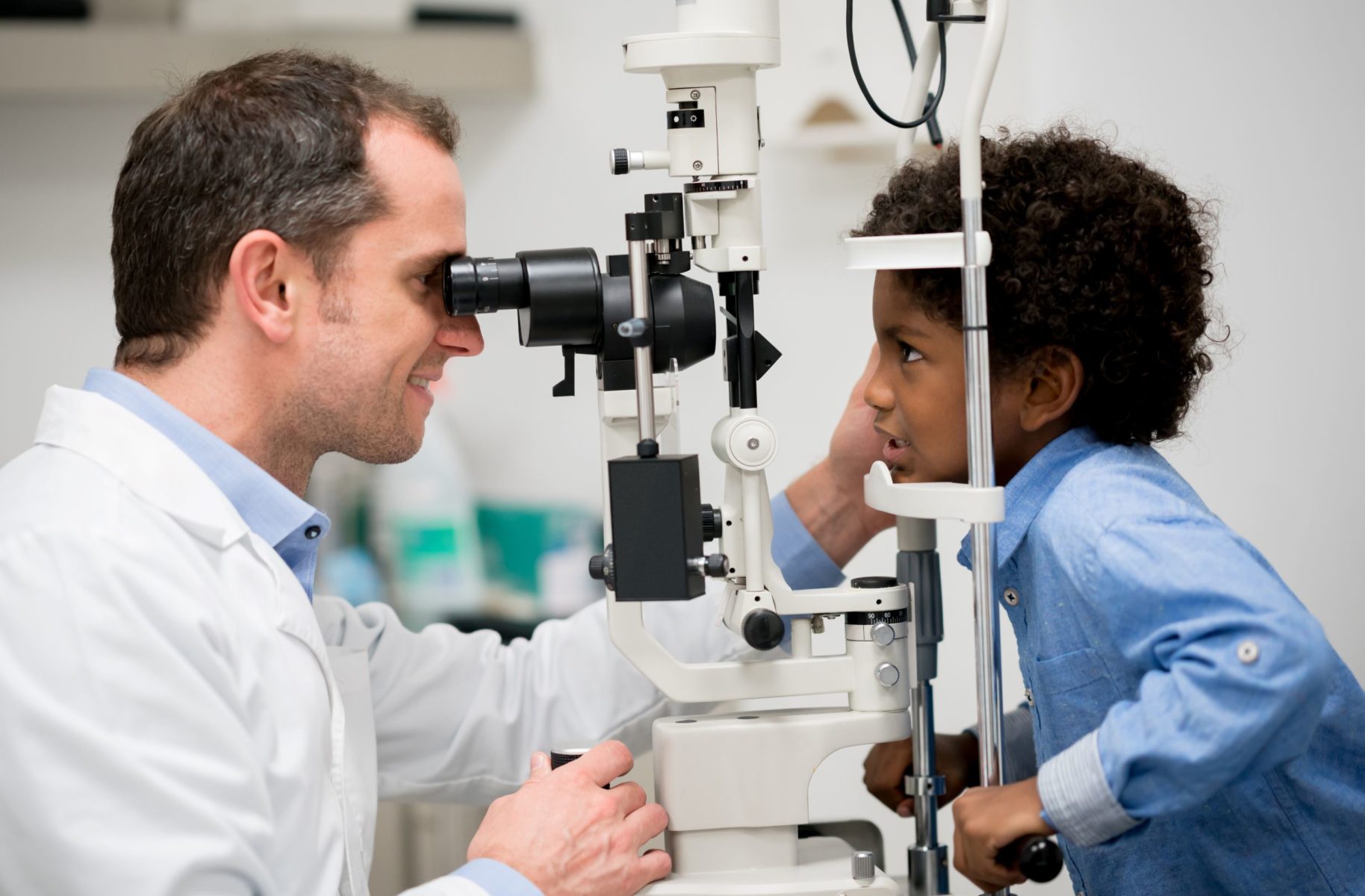
Some children aren’t brought to a pediatric optometrist until after their parents or teachers notice that they seem to be having trouble with their vision. This means that unfortunately, the child has often already spent years struggling with eye problems. Not only can this cause the eye problems to worsen, but it can also impair a child’s ability to further develop fine motor, gross motor, navigational, and even reading and writing skills.
Table of Contents
Ready to schedule a pediatric eye exam in Michigan?
When should my child have their first eye exam?
There is often confusion around when to schedule your child’s first appointment because there are two distinct types of evaluations: a Vision Screening and a Comprehensive Eye Exam.
Vision Screening
What It Is
A quick check of basic eye health, alignment, and visual acuity. It is designed to flag potential problems.
Who Performs It
Pediatrician, Family Physician, or a Trained Health Care Provider (often at school or well-child visits).
When It Is Needed
Recommended at: Newborn, 6–12 months, 1–3 years, and 3–5 years.
Comprehensive Eye Exam
What It Is
A full diagnostic evaluation that checks for eye disease and uses specialized instruments and drops to look at the entire internal structure of the eye. This typically includes pupil dilation.
Who Performs It
A Pediatric Ophthalmologist or Optometrist.
When It Is Needed
Immediately if: Your child shows an urgent symptom (e.g., wandering eye, white pupil).
After a referral if: Your child fails a vision screening or has a family history of childhood eye problems.
Recommended Timeline for Eye Care
The American Academy of Ophthalmology (AAO) recommends the following schedule to ensure vision development is on track:
Newborn
- Screening: A doctor or trained health professional should examine the newborn’s eyes in the hospital.
- Focus: Checking for a basic “red reflex” (similar to red eye in photos), blink response, and pupil response.
6 – 12 Months
- Screening: Second screening done during a well-child exam.
- Focus: Checking for healthy eye alignment and movement.
12 – 36 Months (1 to 3 Years)
- Screening: Check for healthy eye development and alignment.
- Testing Method: May involve photoscreening, where a special camera takes pictures to look for issues that can lead to amblyopia (lazy eye).
3 – 5 Years (Preschool)
- Screening: Vision and eye alignment should be checked.
- Visual Acuity: Sharpness of vision should be tested using charts with symbols, shapes, or letters as soon as the child is able.
- Action Needed: If the child fails the screening or struggles with the eye chart, they should be referred for a Comprehensive Eye Exam with an eye specialist.
5 Years and Older (Kindergarten and Up)
- Screening: Screened for visual acuity and alignment, typically annually at school or the pediatrician.
- Common Issue: Nearsightedness (myopia) is the most common problem in this age group and is corrected with eyeglasses.
- Action Needed: An ophthalmologist should examine a child if they show signs of misaligned eyes or other eye problems.
How do I prepare my child for the eye exam?
Talking to children about what to expect can help them feel more comfortable in the optometrist’s office. Reading books with your kids about going to the eye doctor can also help them see the experience as something that other kids their age are going through as well. If possible, you can schedule their eye appointment after your own, so they can watch you first. Always be calm and confident when taking your child to an eye appointment, as kids tend to draw energy from parents.
What will the doctor do to make my child feel more comfortable?
It’s important to talk with your child’s optometrist or ophthalmologist before bringing your child in. They can tell you what they normally do to make kids in their practice feel comfortable.
During the exam, eye doctors who are used to dealing with children will likely want you in the room and will be upbeat and confident when the children are in their presence. They’ll also likely talk through what they’re doing with children who are old enough to understand, which can relieve the child’s anxiety.
What should I expect after the exam?
If your child’s examination shows that his or her eyes are normal, the optometrist will schedule a follow-up exam with you and send you on your way. However, it’s possible for the doctor to discover an abnormality that needs treatment.
Common childhood eye problems include nearsightedness or farsightedness, double vision, cataracts, and strabismus. Depending on the concern, treatments may include glasses or training tools to help strengthen the eyes’ ability to work together. Very occasionally, surgery is necessary to correct an issue.
As with most medical concerns, prevention and early intervention is the best way to care for your child’s eyes. Encourage good eye health with children, such as having them wash their hands before touching their faces. Additionally, bring them into an eye doctor’s office for regular exams so that if there are any concerns, they can be addressed as early as possible.
Schedule an appointment with a pediatric ophthalmologist today!
Comments are closed.


